
My name is Joanna. If you care about formal titles, by training I’m a philosopher, psychologist, and neuroscientist, but in truth, I’ve only ever had one true interest, an obsession, rather, an unrelenting, persistent “itch” that’s been with me since I was a kid.
The roots of this obsession stretch back to a single night, possibly the most distinct memory I have. I was eleven years old and my mother had been prescribed opioids for her horribly complex case of “spina bifida”, which not only prevented her from ever being able to walk, but also entailed years of always-worsening chronic pain (it didn’t prevent her from being a wonderful mom though). I didn’t understand much about her treatment then, only that she needed to “try a new medication”. The medication was fentanyl. It helped initially, but she quickly built up a tolerance, and one night I witnessed her first full acute opioid withdrawal. I can still see her, gasping for air, twisted in agony, clutching her stomach as though the pain was trying to claw its way out of her. My dad told me to go back to my bed, but I could still hear it all through the wall, so I just sat there, a room away, numb and helpless, curled up in a ball, on the soft carpet of my bedroom. The carpet suddenly felt like quicksand beneath me, seemed to swallow me, but I couldn’t move, couldn’t just go back to bed—so I just laid there, listening. My father explained that she ran out of the “new medication” a bit too quickly, that it was withdrawal, that there was nothing we could do until she got her next prescription in the morning. Opioids are tightly regulated, after all. But we had to survive the night, and in that stretch of hours, steeped in her suffering, I felt a kind of powerlessness that I’d never known before.
Helplessness like that carries a taste – it’s bitter, metallic, and all-consuming. It’s not a memory that fades, not an image that softens with time, it lingers – it etches into you. The hours crawled by, heavy and thick, and the only thing my terrified 11-year-old mind could come up with was a plan so strange, so desperate, I’m surprised I even thought of it.
The next day, I began hiding tiny pieces of her fentanyl patches. I thought, If she thinks she has less than she does, maybe she can ration them better, pace herself. Maybe I could soften the worst of it. And if another withdrawal hit before her next prescription, I could give her the bit I’d stashed away to ease the pain, saying “Look mom, I just found this extra piece on the floor“. It worked for a while, until she caught on, and in the end, it couldn’t outsmart the growing tolerance.
Numbing chronic pain with opioids was like trying to hold a flood with a flimsy dam; it might hold for a time, but the pressure would build until it burst forth with far greater force. The “backlash pain” always seemed to howl louder than the initial ache it sought to silence. I witnessed many more episodes of my mom’s ‘withdrawals’ after that night, during many years of her being on-and-off different opioids, but in that moment, when it first happened, it almost felt like something started ticking inside of me — something formless started to crystallize in my mind, though I wasn’t quite sure how to interpret it yet. Have you ever experienced a thought slipping away, eluding your grasp, only to feel its significance for a fleeting moment? It seemed like some clarity flickered like distant lightning, illuminating something about pain that felt almost tangible, yet still just out of reach. In retrospect, I realize that thought became an anchor, a seed of curiosity I would return to again and again in the years that followed.
I realized that pain wasn’t an “alarm bell” rung by the body, it was something else entirely. Relative. Contextual. Pain could exist without injury. It could coil itself into the brain like a serpent, curling around thoughts and memories, pushing them all away – it was greedy of your being, blotting out all other sensations, once it took root, it was all that remained, just this, and nothing else. Ultimately, I thought, it was a shape, in a way. A quite mysterious, mathematical, internal shape that the mind has a limitless, built-in capacity to take. But whatever that shape was, I thought, it was never random or arbitrary; once it’s there, surely, it leaves traces behind, some mechanistic signature, like the serpent leaving a trail in the dust. Maybe you could catch hold of its tail, trace it back, unravel it, abstract it out, reverse the causal chain that constructs it. From that night onward, I decided I wanted to do what I possibly could to understand that shape, naively perhaps because I never wanted to feel that powerless again.
But how do you even study that? What discipline could answer such a question? I didn’t just want to understand the nociception, the triggers of pain, not how you come to localize it in the body – but the raw “badness” of it, the negative valence that accompanies it. What is that? What is the common denominator between a pain of opioid withdrawal, a pain of loss, a pain of grief, a pain of unfulfilled longing? There must be a fundamental thread deep within the brain that weaves through all these experiences, much like how the shape of a trapeze remains a trapeze even if slightly distorted.
Studying medicine was one way to continue thinking about it more systematically, but back then I thought it might not be enough; this problem was something defies boundaries between many disciplines. I convinced myself that you could only understand pain and valence through a scientific theory of consciousness (and medicine, while steeped in scientific rigor, didn’t feel like the right arena for esoteric discussions of consciousness, at the time). As a naive teenager I thought – well, all I need to do is to study some science (ideally – neuroscience or physics) along with other disciplines that are more shamelessly dedicated to the mind, like psychology and philosophy.
So, when I moved to Krakow to pursue university I did exactly that, I applied to the Individual Interfaculty Program. Admission required making a case during the interview that your interests/goals spanned multiple disciplines, allowing you to pursue multiple degrees at the same time (as you’d expect, this program attracted a diverse mix of individuals: some true geeks, some chronically indecisive, some very full of themselves). But the best thing about being in the Individual Interfaculty Program was that each student was paired with a personal tutor —a professor selected to help you design the curriculum and hold regular one-on-one meetings and discussions with you, reminiscent of an ancient student-mentor relationship. I was incredibly fortunate to have M. as my advisor throughout my entire time at university. Early on, he introduced me to a wide range of theories of consciousness in neuroscience, offering an unbiased overview of the field, and our biweekly meetings became a forum for exploring papers on recurrent processing, predictive processing, Sperling experiments, split brains, higher-order-theories, the global workspace, etc. While none of these theories felt like the definitive answer I was searching for, they sparked my curiosity and fueled my determination to keep learning.
Eventually, he introduced me to Tononi’s Integrated Information Theory: The Provisional Manifesto. Though he wasn’t particularly fond of it, he encouraged me to “familiarize myself with the concepts”. I vividly remember sitting in a beautiful library in Krakow, reading about the “camera chip thought experiment”, and the ideas of information differentiation and exclusion in that paper and feeling an overwhelming sense of awe. Then came the “geometry of integrated information”. This, I thought, was the key—it was all about Q-shapes, and qualities and structures, and pain after all, was just one of them. And even if I didn’t fully understand Tononi’s answers at the time, at least, it felt like he was asking the questions that mattered most to me.
In a bit of a youthful enthusiasm at the age of twenty, I dared to reach out to Tononi himself. I explained that I was writing a review paper comparing nociceptive systems across vertebrates and invertebrates, aiming to synthesize something about the common “shape”—or the “Q-shape,” as he referred to it. Tononi replied kindly, expressing his interest in my work and inviting me to attend his summer school in Italy.
Now, years later, I’m applying for a PhD in neuroscience in his lab. While I’m nowhere near having the answer (every time I think I narrow down some suspect mechanisms, I also spawn more questions) I decided to write this blog to track my understanding over time. Some of it will probably be very personal, some of it might seem like more dry excerpts from scientific readings, all to mull over valence and ideas, about mechanisms and phenomenology. But really, it’s also meant to serve as an anchor-platform – a way to hold myself accountable not to forget, not to get too distracted or pulled away and to continually return to at least thinking about it.
Valence is woven into the very fabric of consciousness, so deeply ingrained in every moment that you barely notice it—like the air you breathe or the rhythm of your heartbeat. An invisible current, quietly shaping your experience, an ever-present interface, a force beneath the surface. But here’s the irony: despite its constant presence, we understand it less than almost anything else. Unlike sensory perception, vision, olfaction, somatosensation, which convinces you that the world exists “out there,” valence ‘feels like’ it originates entirely from within. You don’t need to understand how your brain computes it, you only know the result: it feels good, or it feels bad – because it’s so immediate, so intimately tied to your very being, you believe you are the pull toward pleasure or the recoil from suffering, but this force precedes you, it’s ancient, older than sight, older than thought, coursing through the roots of life itself, and yet it grips you with such subtlety that you don’t see its hand at work. Instead, because it glosses over all your sensory modalities, casting its sheen on everything you perceive, you see the world outside – the people, objects, events – as causing your joy or sorrow (i.e. the painful conversation, the delicious dinner, the ecstatic dance, the gripping book). But that is the essence of the illusion, the valence interface—even though it feels like an attribute of things outside, it’s entirely inside of you, it’s the force that shapes your experience from within, tinting reality with meaning.
But what is it, really, in the most ontological sense? Is there a more gripping question to ask than what is this force that actually directs your entire existence? Even if you think of yourself as “more evolved” than someone who purely pursues pleasure and avoids pain, valence is hidden in all your more abstract pursuits, “higher-order-goods”, all your noble goals, it underpins them – there is a intricate value-making machinery behind it all. Is it worth talking about anything else, until it’s settled? If we could map it, describe it in cold, clear terms—mathematically, formally—then we could control it – reaching into the core of suffering, turning its mechanics inside out. At this point, I don’t even know if this question leads to answers, or if it’s a misguided pursuit, but at least I want to try to see it through.
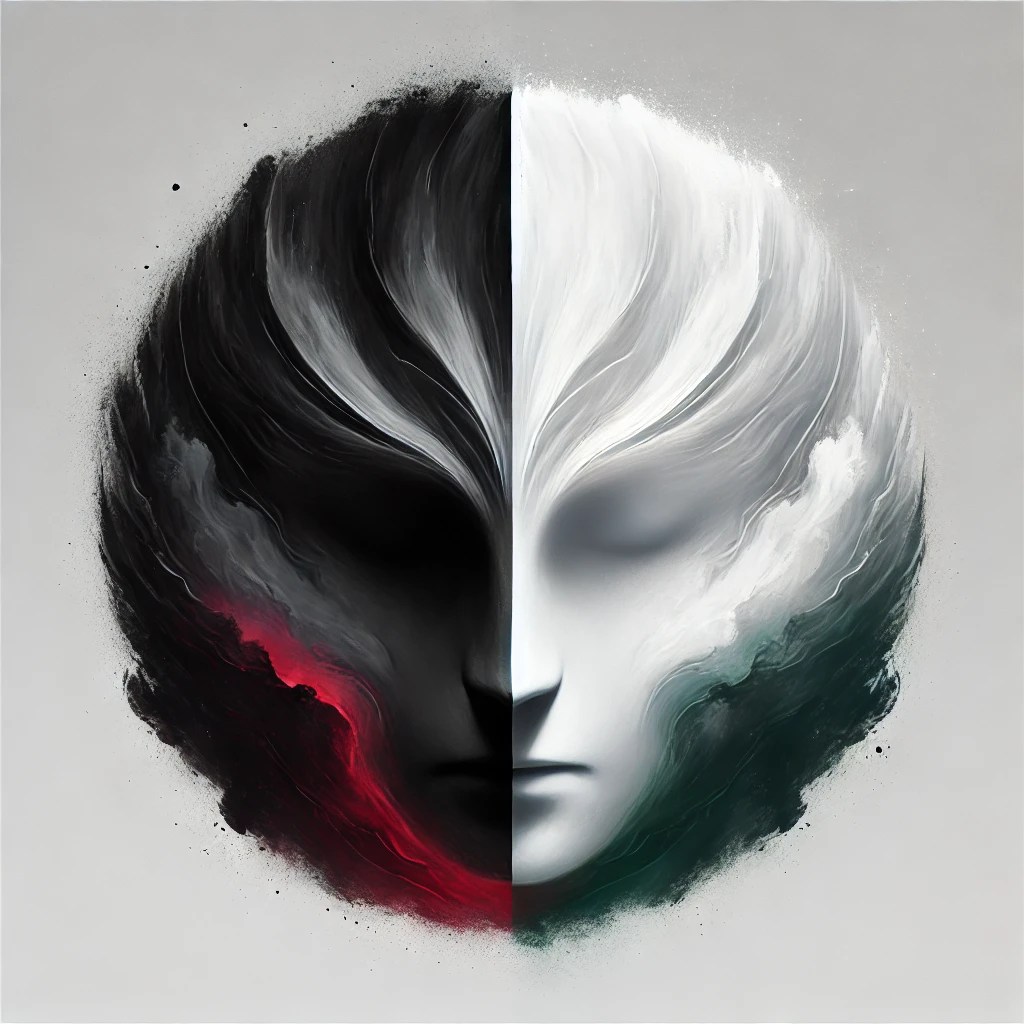
 valence hacking
Leave a comment