
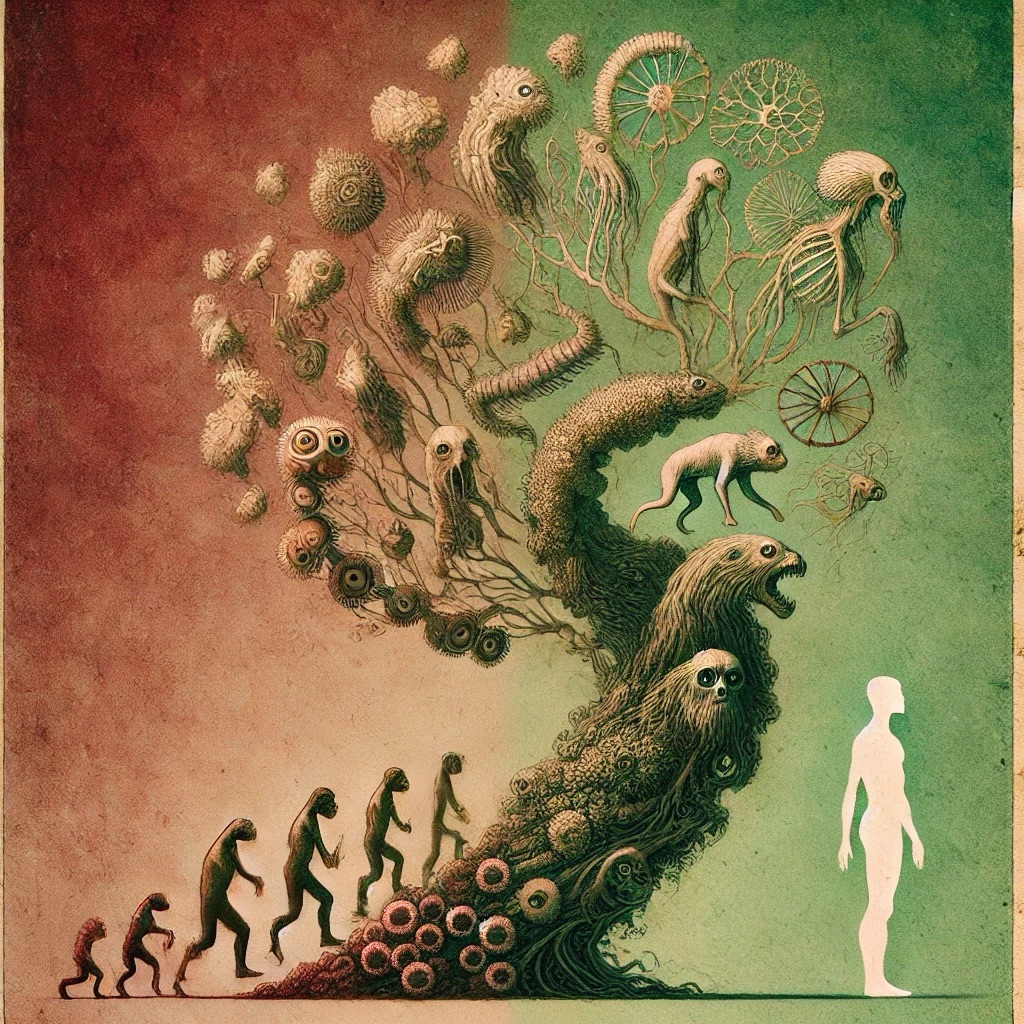
There is something quite unsettling and arbitrary about how exactly your “self” emerged. Among the countless potential locations that had existed in the universe prior to your birth, your “self” once appears, and henceforth occupies a seemingly random chunk of it, converges to a precise spatiotemporal position, and there it is – embodied and endowed with its own unique geometrical point of origin. That spatial perspective anchored to your body is since then inextricably linked with your consciousness, always immediately there, and only ever disintegrates whenever you fall into a dreamless sleep or drift into a state of anesthesia.
This strange link, that association between the two, the coinciding of self and consciousness is central, I think, to the illusion that clouds our understanding of both. Equating self and consciousness carries a certain allure, and understandably so. Both are enigmatic and inherently subjective phenomena, hence a lot of the researchers were drawn to the idea that perhaps consciousness somehow emerges as a brain’s self-model (suffice to mention the influential works of Blanke or Metzinger). In that view, having a representation (or a model) of the self serves as a prerequisite for consciousness, not the other way around. The hope was that by forging conspicuous links between consciousness and self, one can perhaps decompose the seemingly impenetrable mystery of consciousness into smaller, potentially more comprehensible problems, related to a sense of ‘having a body’, ‘sense of agency’, ‘visuospatial perspective’, i.e. one could perhaps demystify consciousness itself and make it more amenable to scientific investigation. So, in recent decades, consciousness has been increasingly entangled with the problems of self, body ownership, and self-location—as if explaining these phenomena would allow us to explain consciousness itself away (models I have in mind here often revolve around multisensory integration within the peripersonal space, etc).
However, that reasoning may be misleading. There is a subtle, but non-trivial leap from merely acknowledging that consciousness exhibits some properties that can be explained by the mechanisms of bodily self, to confidently stating that the self (even in its minimal form) is indispensable for consciousness. Many prominent researchers in the field make that leap. Karl Friston in his account of consciousness strongly claims: “Is self consciousness necessary for consciousness? The answer is yes.” (Friston, 2018). Mary Whiton Calkins stated with confidence: “all consciousness is self-consciousness, that is, one never is conscious at all without an awareness, however vague, confused, unanalysed, and unexpressed, of oneself-being conscious (Calkins, 1908). Similarly Damasio claimed: “if self-consciousness” is taken to mean ‘consciousness with a sense of self’, then all human consciousness is necessarily covered by the term – there is just no other kind of consciousness as far as I can see” (Johnson, 2001; Damasio, 1999); Zahavi similarly asserted: “Self-consciousness is an integral and constitutive feature of phenomenal consciousness” (Zahavi, 2017).
I will try to show you that this is all quite wrong. We have been mistaking a lack of imagination for a genuine insight into necessity.
Consciousness without the self – sifting through the conceptual mess
My strategy is the following.
- Decompose what can be possibly meant by “the self” in consciousness studies, philosophy and neuroscience. It’s usually several phenomenological components.
- Demonstrate clear cases of preserved consciousness along the absence of each of these components (separately and altogether, aka the “rebuttal through exception”).
- Deep dive into the phenomenology of these states and see how valence is still there, despite the lack of self, voila.
The self is obviously an incredibly multifaceted concept, in neuroscience, psychology and philosophy, often serving as an umbrella term for various notions. Leaving aside the complex form of autobiographical self, episodic memory, language and abstract mental image of personal identity, throughout this essay, whenever talking about the “self” I will refer to the most fundamental, pre-reflexive and pre-linguistic sense of self – a basic sense of being a subject of experience, a sense of being encapsulated in a body, distinct from the environment, having boundaries and a point of origin – likely an experience shared with most non-human animals. Such a “minimal self” is often called “the bodily self”, and it can be broken down even further.
Most typically, it encompasses:
- sense of body ownership (this body belong to me)
- sense of self-location (this body is located here)
- 1PP (first person perspective)
- sense of agency (I can direct my own movements and my thoughts feel “mine”, aka sense of mental ownership)
All of these are undeniably very common features of your every-day phenomenology – but as I’ll try to show you – consciousness can exist in much more alien forms, devoid of the self – devoid of either individual components, or of the entire bodily self.
Consciousness without body ownership – the self “transplanted” in out-of body experiences
In many theories of the self, body ownership is thought to be essential for ordinary conscious experience. But is it to some extent part of every conscious experience? Is it always there in the background if we do not pay attention to it? Could there be consciousness completely, uncontroversially devoid of body ownership? If we find at least one case of such nature, we will demonstrate a ‘rebuttal through exception’ and prove that body ownership is not relevant for consciousness.
At first glance, dreams might seem like an example of bodiless consciousness. In dreams, we often lack control over our physical bodies, yet we remain conscious. But whether the mechanisms behind body ownership are entirely absent in dreams is still unclear. It’s possible that even in dreams, we simulate some form of body ownership.
A more striking example of consciousness without body ownership comes from clinically reported Out of Body Experiences (usually associated with epilepsy). In these vivid and often surreal events, individuals report a complete loss of connection to their physical body while maintaining a clear sense of self and first-person perspective (1PP). During an OBE, people describe looking down at their body from an external vantage point, feeling utterly detached from it. Yet, they still retain their sense of self, agency, and location.
Take, for example, one patient who described their OBE:
“I was above… like I didn’t have a body… but it was me. Not a body, but me… up there, not here.” This powerful account captures the sensation of being wholly separated from one’s physical form while still experiencing an intact consciousness (Marsh, 2021). Many individuals describe a sense of freedom of movement and mobility during an OBE (preserved sense of agency). They may feel weightless, while capable of effortlessly gliding through the surroundings and controlling the invisible self solely through their thoughts or intentions (“as if my body consisted of a substance constituted of a mixture between gaseous and liquid states” (Metzinger, 2003))
The survey of OBE questionnaire data conducted by De Foe et aldemonstrated that the lack of body ownership in these states does not entail losing one’s self-other distinction, as the subjects still retain the perceived boundary between ‘me’ and ‘not-me’, experiencing themselves as separate from the outside world (clearly preserved 1PP and self-location) (De Foe et al., 2017). Their “self”, or the center of awareness is however clearly located outside of their physical body (Blanke & Mohr, 2005).
The case of OBE is clear – even if ordinary conscious experience involves a sense of body ownership, mechanisms sustaining it may not be inherently required for consciousness (and as such, theories of consciousness cannot be based on them).

Consciousness without a sense of agency – the self “estranged” in schizophrenia
Another widely recognized component of bodily self is a sense of mental ownership of thoughts and actions, the sense of being an “agent” governing the mind and the body – the sense of agency (Gallese & Sinigaglia, 2010). Many theories assert that at the foundational level, some minimal sense of agency might be a core mechanism for consciousness (David et al., 2008; F. De Vignemont & Fourneret, 2004) and that virtually every conscious experience might be built upon the basic feeling of a subject owning and governing the state he/she is in. Such reasoning seems abundant in theories of consciousness, as well as in analytical and philosophical traditions: “When I (in nonpathological standard cases) am aware of an occurrent pain, perception, or thought from the first-person perspective, the experience in question is given immediately, noninferentially and noncriterially as ‘mine’ (Roessler, 2004; Zahavi, 2005). The mind of one who is conscious is necessarily a mind actively governing the movement of its own attention and thinking processes […]. In the final analysis it is because thinking is active and thinking is essential to consciousness that mental action is a necessary condition of consciousness. (Roessler, 2004); O’Shaughnessy, 2000, pp. 89–264). Such a basic notion of sense of agency should not be limited to a sense of enacting one’s motor actions (after all, one can still be conscious if immobile), but can also refer to being always implicitly aware of enacting one’s thoughts and mental states.
Intuitively appealing, but the case of schizophrenia is problematic here, as a possibly the most vivid cases of consciousness radically devoid of sense of agency and mental ownership of thoughts and actions. To be diagnosed with schizophrenia, according to DSM-V, an individual must exhibit at least two of the following symptoms: delusions, hallucinations, disorganized speech, grossly disorganized or catatonic behavior, negative symptoms (reduced facial expressions, social withdrawal, lack of motivation). One symptom that is not currently included in DSM-5, but seems to be a common denominator of many clinical manifestations of schizophrenia, is the lack of proper sense of agency over both internal dialogue/ thoughts and actions, which may precede the onset of positive symptoms (delusions and hallucinations) (Sass, L, Parnas, 2003). This symptom is often described as a feeling that one’s thoughts, actions, and experiences are not under one’s own control, and may be influenced or controlled by external forces. It gives rise to a sense of detachment or disconnection from one’s own thoughts, feelings, and actions, which can contribute to feelings of powerlessness and confusion ([I]t is not me who feels. I am not interested in what I appear to be feeling, it is somebody else who feels mechanically. (Billon et al., 2018).
“My thoughts are separate from my body, as if my mind exists in one place and my physicality in another. I see myself doing things, like I’m in a movie. I go through the motions as if I’m in a play.” (Parnas & Handest, 2003).
“I walk like a machine; it seems to me that it is not me who is walking, talking, or writing with this pencil. When I am walking, I look at my legs which are moving forward; I fear to fall by not moving them correctly.” (Parnas & Handest, 2003).
Despite this profound loss of agency, these patients are clearly conscious. They are undergoing subjective experiences, often filled with rich sensory perceptions and thoughts. But the automatic assumption that these experiences are “theirs” at a fundamental level is missing. The basic sense of ownership—the mineness of experience—is absent, and yet consciousness persists.
Consciousness without self-location – the self “duplicated” in heatoscopy
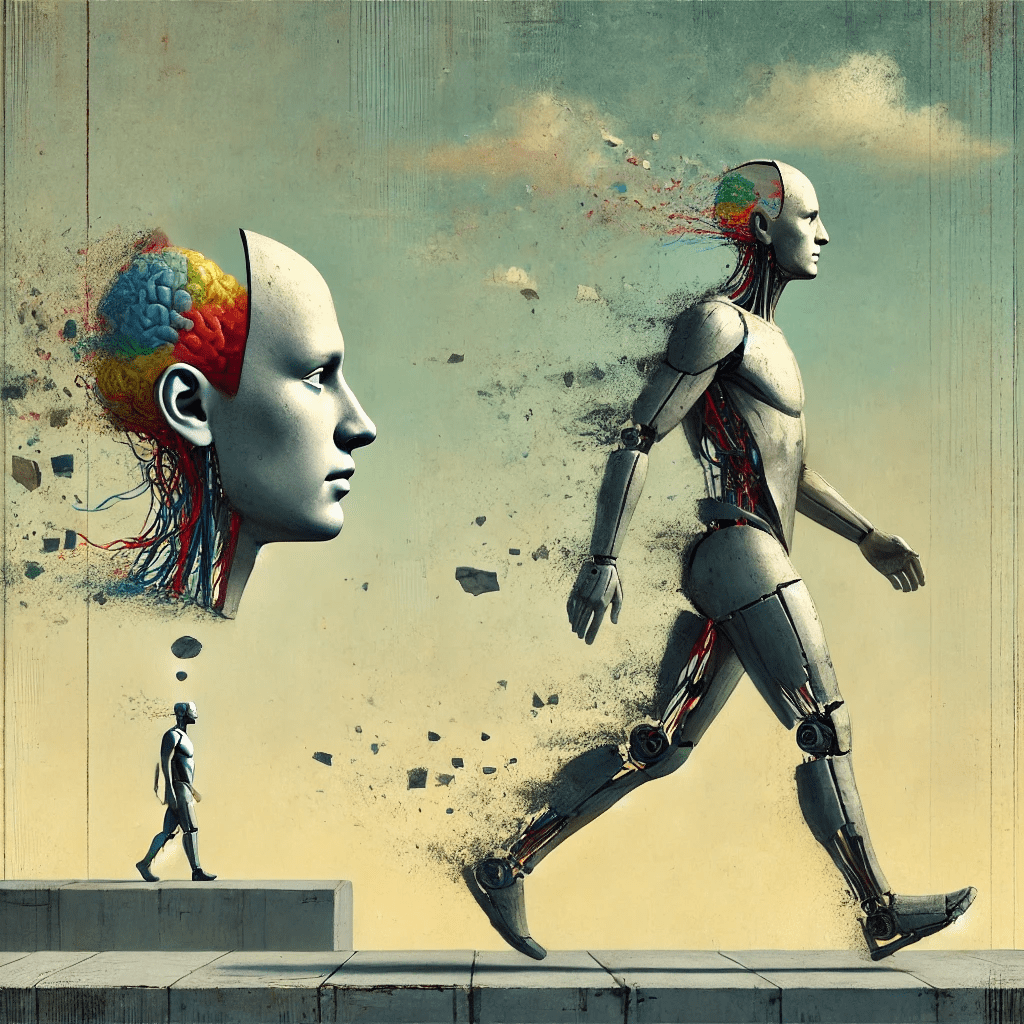
Ok, consciousness can exist without body ownership and without sense of agency – but clearly something like self-location (I sense my body has a singular location in space) must be more fundamental. It’s a sense of having our body positioned relative to the spatial environment and is typically strongly dictated by whatever makes up our first-person perspective and signals originating from the vestibular system (Blanke & Metzinger, 2009; Serino et al., 2013). Indeed, it appears more difficult to find clear examples of absence of self-location, as even major disturbances of bodily awareness seem to spare this basic sense of having a unique, geometrical ‘point of origin’.
Although very rare in its pure form, such a fascinating disorder of self-location can be encountered in heautoscopy (I committed an entire review paper on it, diving into its psychopathology and phenomenology). Heautoscopy is one of the weirdest neurological conditions, in which the sense of self-location becomes unstable and/or duplicated. Similarly to autoscopy, the patients hallucinate a full-body phantom, but while in autoscopy their self-location is singular, in heautoscopy they identify with both their physical body and the phantom, unable to tell where they actually are.
It was like looking at and being in a mirror at the same time. Wherever he went he was accompanied by his double (…) He described how at times they would reunite, only to divide subsequently into two individuals. He described leaving home and catching the bus as a single entity. On the bus, however, he became aware of his Doppelganger sitting nearby. (…) He felt that his body was coming apart (…) Described experiencing two centers of existence and his real position in space was often unclear to him, believing as he did that he was in two places at once.(…) He heard himself talking, saw himself in two places and felt equally real in both. He was not sure, when asked, which one was his real (Mullen, 1983).
[The patient] awakens from sleep and has the immediate impression as if she were seeing herself from behind herself. She felt as if she were “standing at the foot of my bed and looking down at myself.” Yet . . . the patient also has the impression to “see” from her physical [or bodily] visuo-spatial perspective, which looked at the wall immediately in front of her. Asked at which of these two positions she thinks herself to be, she answered that “I am at both positions at the same time.” She did not have the feeling of being out of her body. (Blanke, et al, 2008).
She reported unclear changes in the awareness of her body describing herself as projected out of her body with a feeling of dissociation of mind and body for a few seconds. (…) She explained that the experience to see her double was terrifying and that the attempted suicides were prompted by this distressing experience. She reported to have access to the autoscopic body’s thoughts, words and actions and that the experience of bilocation was petrifying and shocking. (Anzellotti, 2011).
The case of heautoscopy remains controversial primarily due to the limited clinical data available and the absence of systematic studies regarding its underlying causes. Nevertheless, the rarity of such cases should not diminish the importance of taking this syndrome seriously. If heautoscopy is a real phenomenon, it might constitute the most compelling argument for that even self-location is, too, obsolete for consciousness.

Consciousness with a radical loss of all aspects of bodily self – the self “muted” in 5-MeO DMT experience
Partial losses of self are clearly possible without the loss of consciousness. A fascinating question remains though – is a total loss of self nomologically and conceptually possible? Is there any conscious state that is completely devoid of all: body ownership, self-location, sense of agency and 1st person perspective, or is there always at least one of them present in phenomenology, potentially serving as a minimal scaffold for consciousness?
While psychedelics like LSD and psilocybin can blur body ownership and disrupt the sense of agency, they rarely obliterate self-location or the 1PP. In most experiences, even when reality feels distorted, individuals retain some sense of being somewhere. 5-MeO-DMT, however, goes further. It can induce a state of complete sensory disconnection, in which all aspects of the bodily self are shattered. Subjects describe a profound annihilation of the self, where even the basic sense of being located within a body dissolves into the vastness of existence (I totally agree, check out my Ayahuasca report).
First recurring motif is sensory disconnection, that is, loss of awareness of the environment, despite having eyes open (Ermakova et al., 2022). Second motif is an often-frightening loss of body ownership and inability to locate the “self” (Preller & Vollenweider, 2018). Attentional disturbances, inability to direct attention, often the need to ‘give into’ the experience, speak for a lack of sense of agency, both over motor actions, but also over one’s thoughts and intentions during the experience. (I recall no thought process, I wasn’t thinking at all, just simply experiencing. (#17378) The world as I knew it is gone forever […]. There is no thought. There is no time. There is no world.). That indicates that self-location, body ownership and sense of agency are either diminished or completely wiped out of subjective experience in a compelling way – I was completely disconnected somatically, unable to locate or feel my body […] unable to locate myself – or anything else – anywhere in particular. I had no body, not even the slightest semblance of a dreambody or mental-body, and I had absolutely no sense of where I was. (these reports come from the gold Erowid database).
An intriguing, but relatively unexplored inquiry pertains to what happens with 1PP in 5-MeO-DMT experience. 1PP is defined as an even more basic subcomponent of self-location – a sense of possessing a unique geometrical point of ‘origin’, which in sighted individuals usually translates to having a subjective visual field. Intriguingly, if 1PP is somehow preserved in 5-MeO-DMT experience, it resembles nothing familiar of a typical, waking 1PP. An online questionnaire on a sample of 515 participants revealed that most of respondents scored high on items of the Mystical Experience Questionnaire relating to “Loss of your usual sense of space” (95% of respondents), “Loss of usual awareness of where you were” (88%) and “Being in a realm with no space boundaries” (87%) (Davis et al., 2018). That is also consistent with anecdotal reports from Erowid database, that points to a systematic lack of awareness of subjects’ location in space during the experience: Soon I am falling, falling, up, down, inward, outward, I’m not really sure. I am flung into a room with no features and no depth cues. (#5816) I was the universe, I was everywhere and nowhere, everything and nothing all at the same time. (#49690) Any concept of “time” or relative “space” […] was carried off along with the rest of manifest existence […] moving my consciousness inward and outward in unimaginable magnitude, “eventually” into the yawning maw of Nothingness […]. All sense of “I” [was] instantly gone. (#23769)
This and similar reports point to a lack of unique, singular point of origin, where the observer is located, which often coincides with an experience of a ‘different kind’ of geometry of the visual field (sometimes described as more hyperbolic rather than Euclidean), and the inability to ‘center’ one’s experience. Others add that while the default visual field is typically an ordered spatial structure (that is, there are clearly organized left-right, top-bottom regions and directions within it, that can be selectively highlighted by attentional mechanisms), in 5-DMT that basic structure appears scrambled, disorganized, and as such, hard to make any sense of.
One can argue though, that even if the 1PP is heavily distorted in these cases, what always remains is some fundamental sense of “having” that bizarre perspective – a residual aspect of selfhood, corresponding to “mineness” of that however strange perspective. Some reports nonetheless, speak against any remaining phenomenology of “me” in it: “There was no self, nothing to separate me from the sensation. (#81888) I had no idea which part of what was happening or what I was seeing was “me”. (#112103) I had previous experience with [other] hallucinogens […] and had always felt able to differentiate and mediate between the experience and the “I” as its subject […]. This time, however, the experience was relentless and psychologically brutalizing. (#49107) It is a complete annihilation of self […]. I was absolutely nothing but a sensory perceiver, stuck within the split seconds that were eternity. (#18198) It felt as if all of the atoms of the molecules that typically form my physical self simply dispersed, and even my sense of self, or ego, vanished […]. (#56384) I wasn’t me any longer. There was no me. There was no ego. (#27601)
Overall, if one looks for a conscious state that completely mutes most, if not all aspects of selfhood, it appears the 5-MeO DMT experience might be the closest candidate for it, demonstrating that even the most robust aspects of bodily self such as self-location and 1PP can be absent from consciousness, and yet consciousness is not abolished.
Consciousness =/= self
Is all consciousness self-consciousness, as claimed by Karl Friston? If everything that we could possibly mean by the minimal bodily ‘self’ (body ownership, 1PP, self-location, sense of agency, sense of mineness of mental states) can be selectively stripped out of consciousness, we therefore have grounds – on the basis of “rebuttal through exception” – to firmly state that it is not the case. Whatever the self is, it’s a multifaceted, multi-dimensional, collection of functions, that all clearly serve an evolutionary role (Kircher, 2005), but whose explanation cannot serve as a ‘way out’ of the hard problem of consciousness.
Valence can exist in selfless states
In many of the cases I reviewed, even as some or all aspects of selfhood were stripped away, valence often remained untouched. Subjects in 5-MeO-DMT experiences report deep euphoria, even as their personal identity dissolves into the void. In heautoscopy, patients often experience deep fear or confusion, even when they cannot locate themselves in a body or in space. This might seem like a minor detail, but it’s far from trivial – so many theories of consciousness are still built around the “self,” and theories of emotion often treat the self as the necessary anchor for feeling, implying that to experience joy, fear, or sorrow, one must first have a sense of “I.” But maybe we have it the wrong way around.
The persistence of hedonic tone despite the total collapse of self is not just a curious footnote in the science of consciousness, it may reveal something fundamental about the nature of being. If valence survives when all aspects of the self—agency, body ownership, self-location—have dissolved, then perhaps consciousness is not organized around the self at all, but rather around the capacity to feel valence.
This is crucial for researchers who argue that less-evolved animals or infants don’t truly feel pain because they lack a fully developed sense of self. It also has implications for AI: if valence can exist without a self, then AI systems don’t need necessarily a self-model to experience pleasure or suffering. As long as they have the proper causal architecture for valence, whatever that is, they will feel, and our challenge lies in understanding this architecture.
Valence may be more deeply ingrained within the structure of consciousness than the self itself. The self, in this view, is merely a lens—a narrative overlay that interprets and organizes what is, at its core, a far deeper, more primal force: the capacity to feel. Strip away the self, and what remains is pure, undiluted valence—pleasure and pain, the true bedrock of consciousness.
 valence hacking
Leave a comment